The hour before sleep is a strange, quiet wedge of time. It is the one part of the day when the noise finally stops and your own mind has the floor — and for most of us, that is exactly when we hand the floor to a glowing screen. We scroll until our eyes are heavy, then wonder why our heads are still full. Reading before bed beats a screen for one simple reason: it does the opposite thing to your brain.
This is not a purist argument about books versus phones. It is about what kind of ending you want to give your day. A screen hands you endless fresh stimulation and keeps your nervous system gently on alert; a paper book closes the world down and lets it go quiet.
Why a screen keeps you awake
There are two problems with screens before bed, and they compound each other. First, the blue light in a phone and laptop tricks your brain into thinking it is still daytime, delaying the release of melatonin that helps you fall asleep. Second, content itself is engineered to keep you engaged — a video autoplays, a feed never ends, a message waits for a response — so your attention stays high and your thoughts stay busy. You do not stop scrolling because you are calm. You stop scrolling because you are exhausted.
The benefits of reading before sleep begin precisely where screens fail, and the book before bed benefits are measurable: better sleep onset, calmer thoughts and a gentler wind-down. A paper book has no blue light, no notifications, and no infinite feed. Its only demand is that you follow one calm line of words to the end of the chapter. That quiet demand is exactly what your nervous system needs to wind down.
How a book signals sleep to your body
Reading is a low-arousal activity: it lowers heart rate, slows breathing, and gives the mind a single gentle thread to follow instead of a dozen racing ones. When that thread is present, the body gets the clear signal that danger is not near, nothing is urgent, and it is safe to let go. That is the exact physiological state sleep needs.
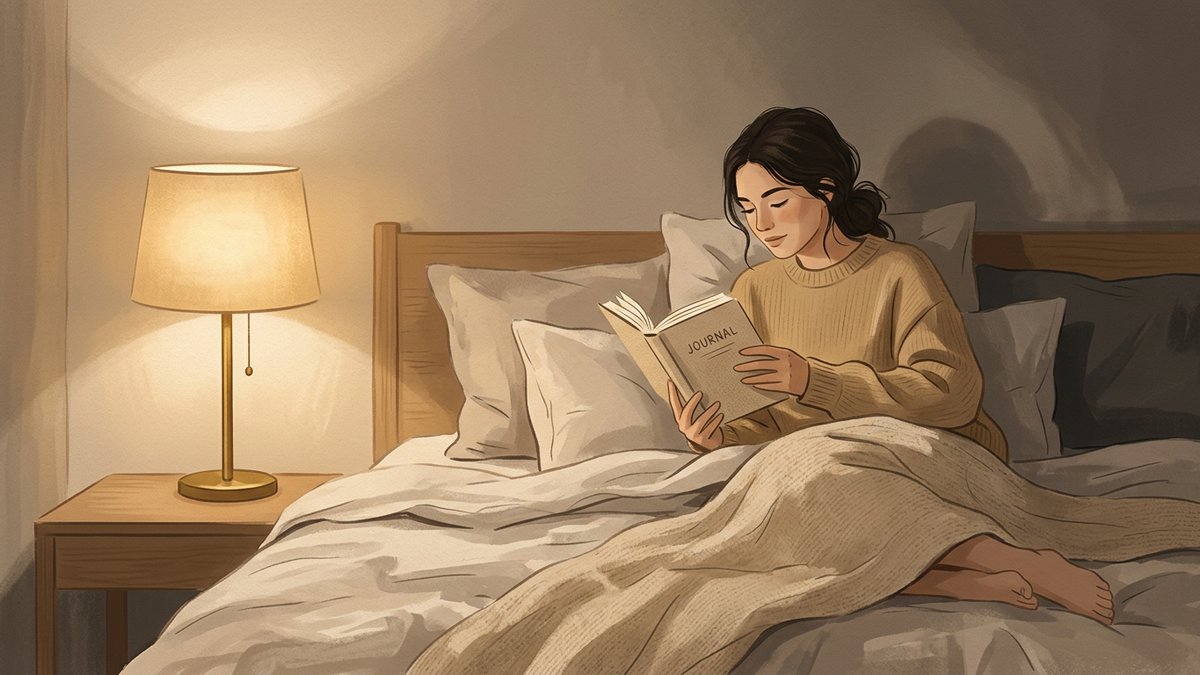
Reading in bed works even better when it becomes a ritual. Because the brain is associative, it begins to pair the act of opening a book at a warm lamp with the feeling of drowsiness. After a few weeks, the very first page starts to ease you toward sleep — a response no screen can replicate no matter how tired you are.
Books to read before bed
- Slow fiction with warm prose and low stakes — novels about small lives told gently.
- Cozy mysteries and comfort mysteries where nothing terrible happens.
- Nature essays and lyrical nonfiction you can read in chapters.
- Short-story collections you can close at any point.
- Calming classics you know well and love to revisit.
- Memoirs told with warmth and unhurried detail.
The best books to read at night share a quality: they do not make you want to keep going under duress. In fact, a good book for sleep is almost a contradiction in the best way — interesting enough to want to return to, calm enough to put down at any moment. Steer clear of edge-of-the-seat thrillers and dense arguments that keep your brain working.
Compare for yourself: reading vs scrolling
Try a simple experiment for one week. On the evenings you would normally scroll before bed, put the phone in another room and read a paper book for twenty minutes instead. Most people report two immediate changes: they fall asleep faster, and the quality of their rest feels deeper. Many also notice something subtler — their thoughts at night become slower and kinder, because the last thing their mind took in was a story rather than an argument with the internet.
Reading before bed instead of phone is not about being virtuous. It is about giving your brain a gentle, human ending to the day — the kind that leaves you feeling settled rather than wired. That is the whole difference between mere sleep and restful sleep.
Build your bedtime reading ritual
The ritual is simple and forgiving. Choose one book and keep it on the nightstand. Set a warm lamp and a comfortable spot before your sleepy thoughts arrive. Dim the overhead light, put the device away, open the page. Twenty minutes is plenty; even ten is better than a scroll. If your mind wanders, let it — a story will still be waiting.
Over time, reading before bed becomes an anchor your body looks forward to. It is a small, reliable pleasure that protects your rest and restores a little of your inner quiet. And when the light clicks off and the last line lingers in your head, you will notice something that has become rare in modern evenings: you are not fighting your mind for once. You are drifting with it.