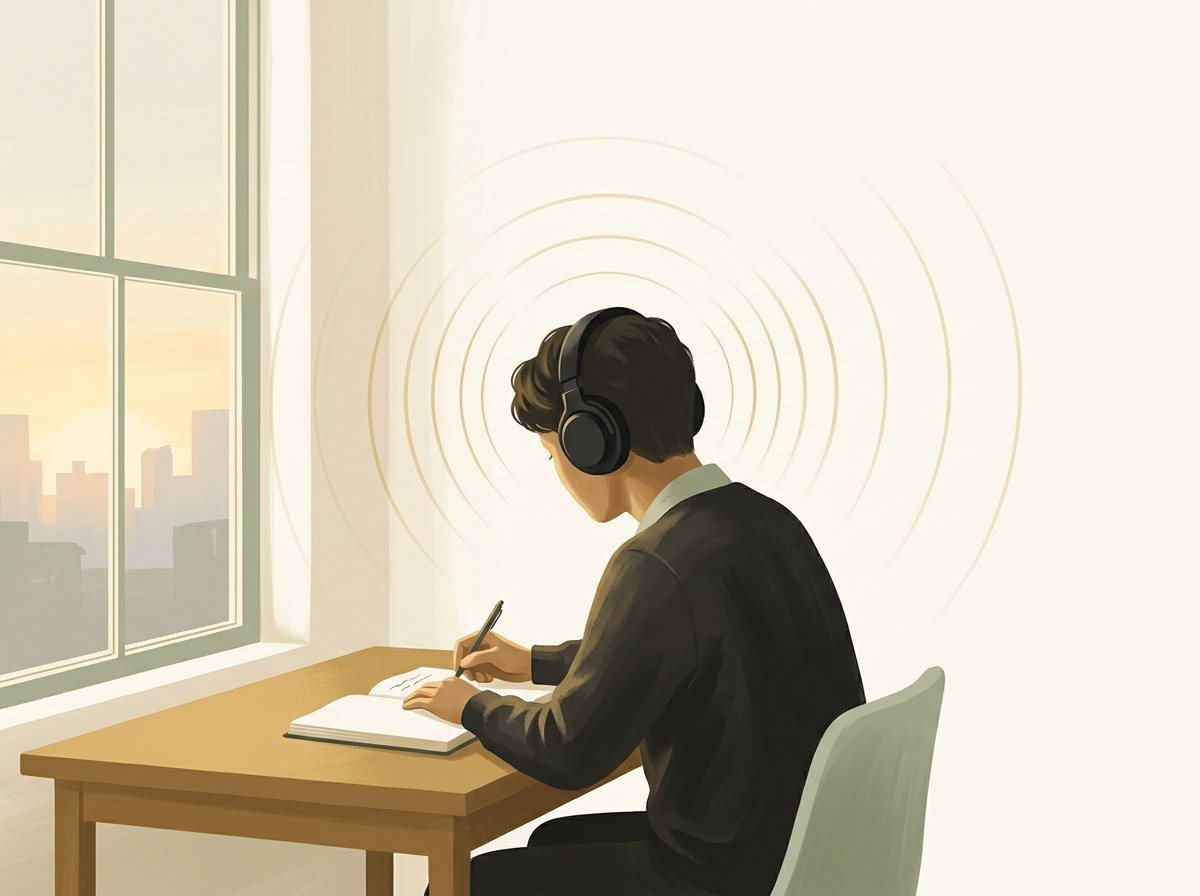
Notice how your workday actually divides itself. There is the work that asks your full attention — writing, designing, solving a hard problem, thinking something through. And there is the work that merely fills time — answering routine email, shuffling reports, moving messages between folders, attending meetings that decide nothing. These are not the same kind of task, yet we treat them the same way, scheduling one against the other without a second thought.
That indifference is expensive. Your deepest attention is the scarcest resource you own, and busywork quietly consumes it. Understanding deep work vs shallow work is the first step to spending your best hours where they genuinely matter.

What actually counts as deep work
What is deep work? It is cognitively demanding activity performed in a state of distraction-free concentration, producing something of real value that is hard to replicate. It is writing a difficult passage, designing a system, learning a new skill, solving a non-obvious problem, or making a judgment that changes a project’s direction. Deep work examples share one trait: they push your abilities and leave something behind.
Shallow work, by contrast, has a meaning that flatters us: it is logistics, low-value and easy to replicate. It is the email, the forwarding, the status update, the ten-minute favor that turns into forty minutes of context-switching. Not all busywork is bad — it keeps the day moving — but it becomes a problem the moment it crowds out deep work.
The quiet cost of busywork
Busywork borrows the feeling of productivity without delivering it. At a glance, a day full of responses and re-files looks accomplished: the calendar is full, the inbox is empty. But when you look back after six months, none of it is remembered and little of it matters. Meanwhile the deep work you kept postponing has a way of forming a queue that everyone eventually notices.
How to stop procrastinating at work is not really about discipline; it is about noticing how often “easy work” is an escape from “important work.” Clearing small tasks feels productive and avoids the anxiety of the hard task. The fix is not to work harder but to protect the kind of work that actually advances your life.
The deep work rules that protect your focus
- Choose one priority. Each day, name the single task that would make the day count, and do that before anything else.
- Schedule deep work like an appointment. Book a two-hour block on your calendar and defend it against every meeting.
- Close every exit. Silence your phone, close messaging apps, and hide notifications, so concentration has nowhere to leak.
- Measure by outcomes, not hours. A focused 90 minutes on the right task beats a distracted eight-hour day.
- Keep a shallow-work buffer. Reserve a short, defined window for email and logistics, instead of dribbling them through the day.
The key insight — the heart of the deep work book by Cal Newport — is that deep work is not more effort; it is more deliberate placement of the same effort. You already have limited focus hours. The deep work techniques simply make sure the hardest, most valuable work gets them, and the trivial work gets the remainder — not the other way around.
Time blocking: the practical technique
The most reliable way to learn how to do deep work is time blocking. Divide your day into blocks, give each block a single job, and respect the boundary between them: two protected hours for the project in the morning, one short window for email after lunch, another deep block before the day ends. You are not scheduling work — you are scheduling attention, and that changes everything.
The discipline this requires is real but gentle. The point is not to live in a rigid prison of blocks, but to ensure the deep work actually happens before the busywork fills every crack. When the deep block is written into your calendar and defended like a meeting with your most important client, it survives contact with the day.
How to start today
You do not need a grand system. Tonight, write down the one task that would make tomorrow matter. Tomorrow morning, block two hours and do exactly that task with every notification closed. Let email and messages wait for the buffer you have set. Then notice how it feels to end the day having actually moved the thing that moves you.
Deep work and shallow work will always coexist; the skill is not to abolish one but to keep them in the right order. Put your best hours where they earn the most, protect them like the treasure they are, and let the busywork live in whatever time is left. Your best work is not a matter of finding more hours. It is a matter of what you choose to do with the ones you already have.