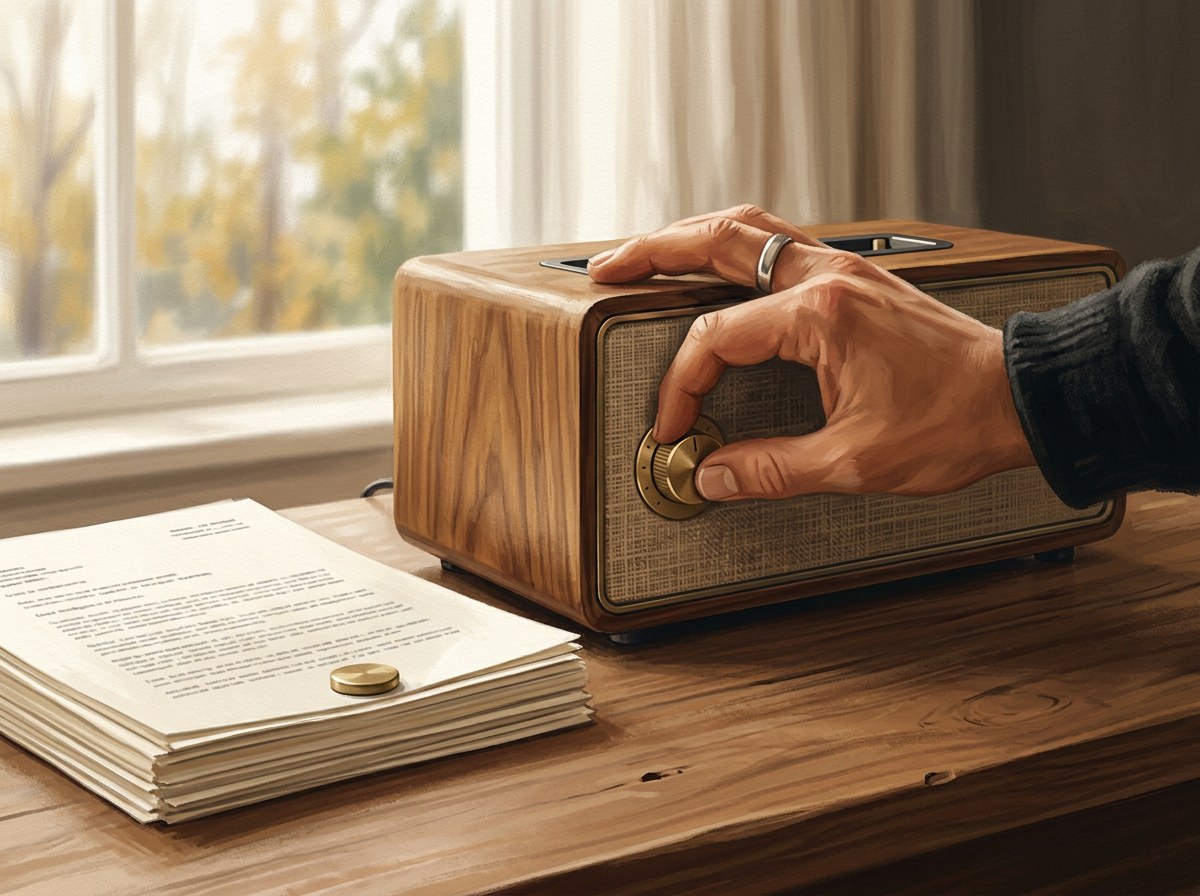
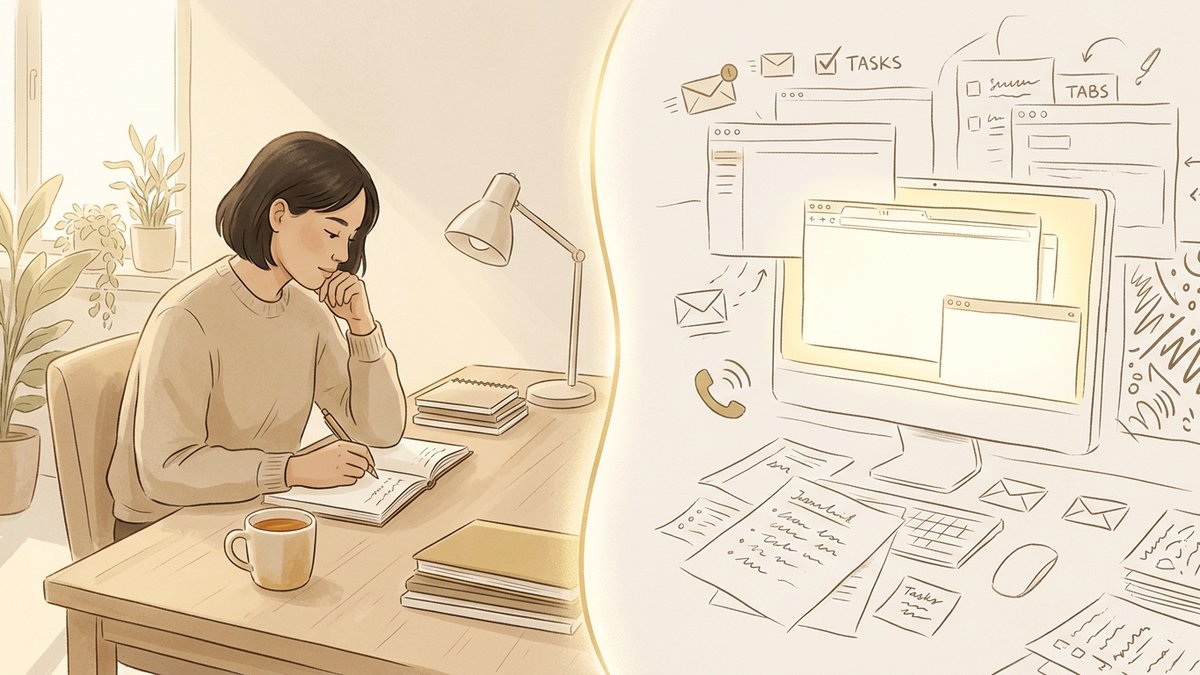
We assume concentration happens in silence, and that any sound is a distraction fighting the quiet. The truth is messier and more useful. A silent room does not stay silent: the refrigerator hums, a neighbor walks, a notification ticks, traffic shifts in pitch. Each one of those small, unpredictable changes yanks your attention for a beat — and a day of deep work is quietly dismantled by hundreds of those beats. Focus music works precisely because it replaces a jagged, unpredictable sound environment with a smooth, steady one. That is the entire idea behind masking, and it matters more than whether a track is beautiful.
Attention Is a Budget, Not a Filter
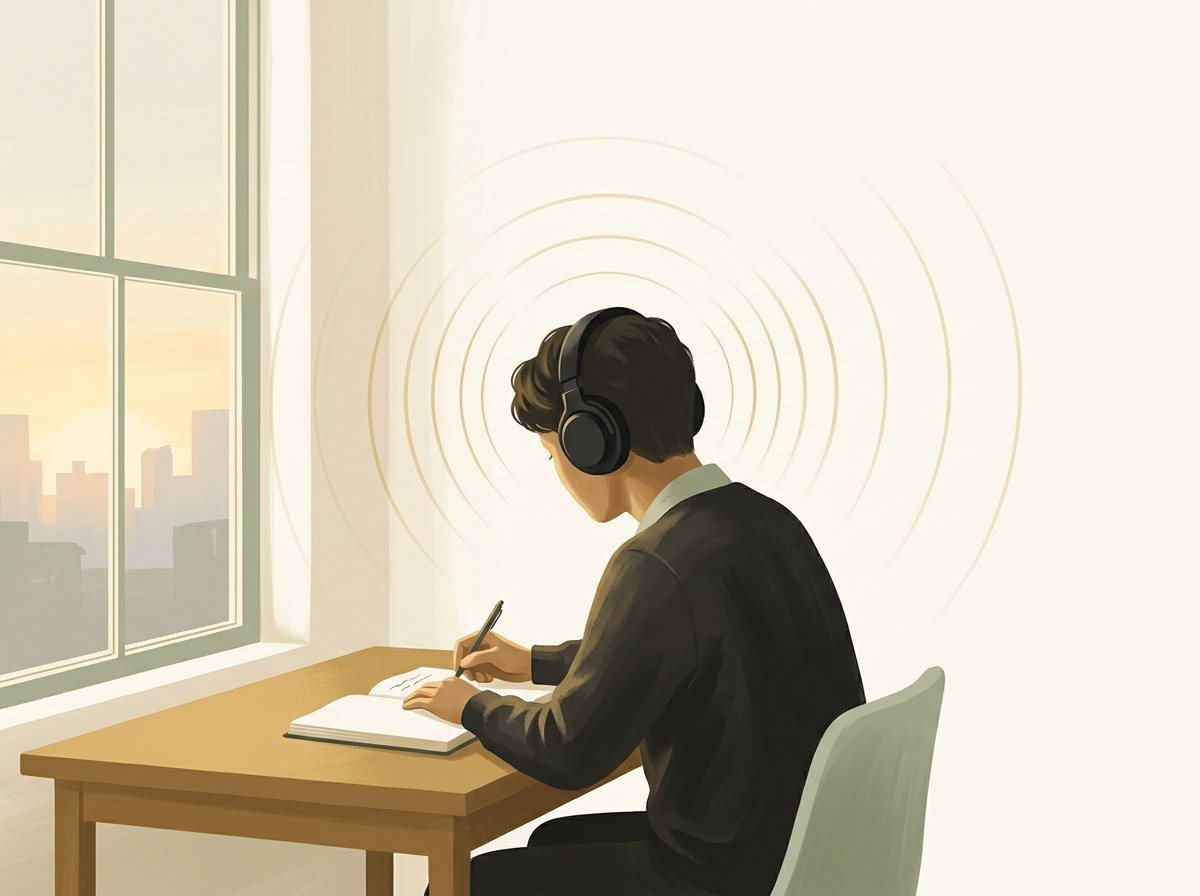
The brain treats surprising sounds as a priority signal, not background noise. When a new sound appears — a door, a voice, a ping — it briefly re-routes attention to figure out whether the change matters. Sustained concentration depends on the brain being able to predict what comes next, and unpredictable audio breaks that prediction over and over. Music for clarity helps by filling in the gaps: a continuous, unchanging soundfield leaves less empty space for stray noises to cut through. It is not that concentration music erases distraction so much as it raises the cost of surprise, and an attention system facing a higher threshold has an easier time staying on task.
Why Volume May Be the Whole Trick
The single most underrated variable is loudness, and most people get it wrong in the obvious direction — too loud. Calm instrumental for study and work needs to sit just below your attention threshold: present enough to blanket sudden noise, quiet enough that you stop noticing it is playing after the first minute. If you can hum the melody or tap along, it is too loud. A good rule is to set the volume so the track is clearly audible when the room is still, then drop it one more notch. At that level, the sound stops being something you listen to and becomes the texture of the room — which is exactly when brain activation music does its most useful work.
Matching the Soundfield to the Task
Different kinds of work want different densities of sound, and a single favorite playlist is the least useful option. Alpha waves music, with its long, unbroken tones, suits reading, drafting, and any task where you are constructing thoughts — you want the widest possible space. Tasks that still involve your ears, like video calls or audio-heavy editing, benefit from a faint instrumental music for concentration that you can validate against; a space without hard edges keeps your voice easy to track. Study music for dense, mechanical work can carry a little more texture, because routine tasks tolerate it without stealing clarity, while creativity music and music for creative work typically call for the same wide, unbroken space as drafting. The art is choosing the folder of background that dissolves rather than competes.
- Drafting, reading, designing: the sparsest long-tone tracks — as little movement as possible at low volume.
- Mechanical or administrative work: a slightly fuller calm instrumental for study and work that still never surprises you.
- Any task where you still need to hear people: a faint, even hum just above perception, and no sudden swells.
- Every session: trim the volume one notch below the level where you first stop noticing it.
Make the Sound a Signal, Not a Slogan
A dedicated speakers-or-headphones ritual works because of the pairing itself: the same audio background at the start of every deep work session becomes a rail your attention can slot onto. Brain stimulation music works this way by holding a steady rhythm the mind can lock to without effort. Clear mind music that returns is more than comfort — it is a reliable starting cue. Over time the opening bar alone primes the concentration you used to need a full minute to rebuild. This is the difference between hearing focus music as a passive backdrop and using brain power music as a working instrument in your daily routine.
If you want to hear the mechanism for yourself, start with a single uninterrupted deep focus music track during your next prolonged writing or coding session — volume deliberately low — and notice what happens to the mental static when a phone rings or a door closes. The noise still registers, but it no longer owns a beat of your attention. That small change is the whole value: not a louder focus, but a quieter threshold between you and the work.